Sapporo Ichiban (サッポロ一番) is a brand of instant noodles (most of them ramen) made by Sanyo Foods, and rivals to other Japanese ramen brands like Nissin and Maruchan.
Sapporo (札幌市 Sapporo-shi) is the fifth-largest city in Japan by population, and the largest city on the island of Hokkaido. From the year 1966, a food company named Sanyo Foods began to sell instant ramen under the brand name “Sapporo Ichiban”.
Instant noodles are often criticized as unhealthy or junk food. A single serving of instant noodles is high in carbohydrates but low in fiber, vitamins and minerals. Noodles are typically fried as part of the manufacturing process, resulting in high levels of saturated fat and/or trans fat.
Encouraged by the commercial sector, the secular celebration of Christmas is popular in Japan, though Christmas is not a national holiday. Gifts are exchanged and children’s presents are left next to their pillow at night. Christmas parties are held on and around Christmas Day; the Japanese type of Christmas cake is often a white whipped cream cake with strawberries.
The most famous dessert made with shortcake is strawberry shortcake. Japanese-style strawberry shortcakes use a sponge cake base, and are a favorite Christmas or birthday cake in Japan.
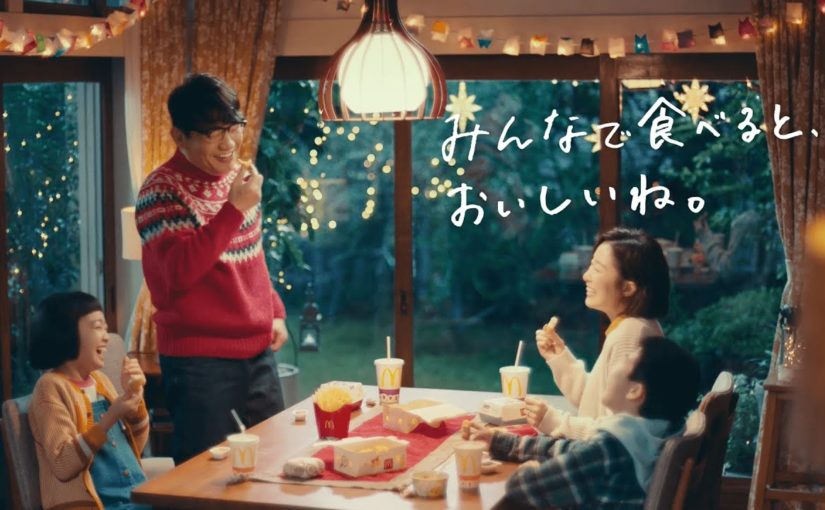
[McDonald's] McFlurry is a vanilla ice cream dessert that has pieces of candy, fruit or cookies mixed into it.
Nigirizushi (握り寿司, lit. hand-formed sushi) consists of an oblong mound of sushi rice that the chef presses into a small rectangular box between the palms of the hands, usually with a bit of wasabi, and a topping draped over it. Unlike sashimi, which is almost always eaten with chopsticks, nigirizushi is traditionally eaten with the fingers, even in formal settings
Wasabi is often served with sushi or sashimi, usually accompanied with soy sauce.
Soy sauce is a condiment produced by fermenting soybeans with Aspergillus oryzae and Aspergillus soyae molds, along with water and salt. All varieties of soy sauce are salty, earthy, brownish liquids intended to season food while cooking or at the table. Soy sauce has a distinct basic taste called umami (旨味, literally “delicious taste”) in Japanese.
The Fuccons, known in Japan as Oh! Mikey (オー! マイキー Ō! Maikī), is a series of Japanese comedy sketches created by Yoshimasa Ishibashi featuring a family of Americans (“The Fuccons”) living in metropolitan Japan.
A traditional Japanese breakfast is based on rice, seafood, and fermented foods, which do not differ substantially from dishes eaten at other meals in Japanese cuisine. A typical Japanese restaurant breakfast presentation would be miso soup, rice with nori or other garnishes, nattō, rice porridge, grilled fish, raw egg, and a pickled vegetable.
(うなぎ) is the Japanese word for freshwater eels, especially the Japanese eel, Anguilla japonica. Unagi is often eaten during the hot summers in Japan. There is even a special day for eating unagi, the midsummer day of the Ox (doyo no ushi no hi).
Kabayaki (蒲焼) is a generic Japanese term for a dish of seafood which is filleted, boned and dipped in a sweet soy sauce-base sauce before broiled on a grill. In general, kabayaki refers to the dish made with unagi.
Hokka Hokka Tei (ほっかほっか亭) is a bento take-out chain with over 2,000 franchises and company-owned branches throughout Japan. Hokka Hokka Tei [was] the major brand name of Plenus Co., Ltd., which used to be engaged in office equipment sales before it changed industries to the food industry in 1980 [and then in 2008 split from Hokka Hokka Tei to form the HottoMotto bento chain in 2005.]
Taiko (太鼓) means “drum” in Japanese (etymologically “great” or “wide drum”). Outside Japan, the word is often used to refer to any of the various Japanese drums (和太鼓, wa-daiko, “Japanese drum”, in Japanese) and to the relatively recent art-form of ensemble taiko drumming (sometimes called more specifically, kumi-daiko (組太鼓)).
Cup Noodles is a brand of instant ramen noodle snack manufactured by Nissin, packaged in an XPS foam, hard plastic or paper cup. The product is known for being inexpensive and easy to prepare. Other brand names are used in specific countries, such as Cup Noodle in Japan.
Reiko Takagaki (高垣麗子)(born October 11, 1979 in Tokyo, Japan) is a fashion model and actress. She is married to Japanese speed skater former Hiroyasu Shimizu (清水宏保).
Pachinko (パチンコ) is a Japanese gaming device used for amusement and gambling. A pachinko machine resembles a vertical pinball machine, but with no flippers and a large number of relatively small balls. In Japan, gambling within the private industry is illegal, but pachinko parlors are tacitly tolerated by the Japanese authorities as “semi-gambling” and are not categorically considered as centers of illegal activity.
The Matrix is a 1999 American science fiction-action film written and directed by Larry and Andy Wachowski; starring Keanu Reeves, Laurence Fishburne, Carrie-Anne Moss, Joe Pantoliano, and Hugo Weaving.
Bullet Time refers to a digitally enhanced simulation of variable speed photography used in films, broadcast advertisements and video games. It is characterized both by its extreme transformation of time and space.
Soba (そば or 蕎麦) is a type of thin Japanese noodle made from buckwheat flour. Chilled soba is often served on a sieve-like bamboo tray called a zaru, sometimes garnished with bits of dried nori seaweed, with a dipping sauce known as soba tsuyu on the side.
Daiichi Sankyo Co., Ltd. (第一三共株式会社, Daiichi Sankyō Kabushiki-kaisha) is a Japan-based major pharmaceutical company, which ranks number 22 in the world in sales.
Shabu-shabu (しゃぶしゃぶ, also spelled syabu-syabu) is a Japanese variant of hot pot. The dish is related to sukiyaki in style, where both use thinly sliced meat and vegetables, and usually served with dipping sauces.
Ponzu (ポン酢) is a citrus-based sauce commonly used in Japanese cuisine. It is very tart in flavor, with a thin, watery consistency and a light yellow color.
Nicknames for methamphetamine are numerous and vary significantly from region to region, some common nicknames for methamphetamine include “crank”, “meth”, “ice”, “crystal”, “glass”, “amp” (USA). “shabu” or “syabu” (Japan and Philippines), “tik” (South Africa), “P” (New Zealand), “piko” (Slovakia), and “yaa baa” (Thailand).
The poet Bashō is named after the Japanese word for a banana plant. The “bashō” planted in his garden by a grateful student became a source of inspiration to his poetry, as well as a symbol of his life and home.
[Bashō's] disciples built him a rustic hut and planted a banana tree (芭蕉, bashō) in the yard, giving Bashō a new haigō and his first permanent home.
Fundoshi (褌) is the traditional Japanese underwear for adult males, made from a length of cotton. Before World War II the fundoshi was the main form of underwear for Japanese adult males; however it went out of use quickly after the war with the advent of new underwear, such as briefs and trunks, on the Japanese market.