Music at VIDEO ICHIBAN

Sony HiTBiT Word Processor HW-30

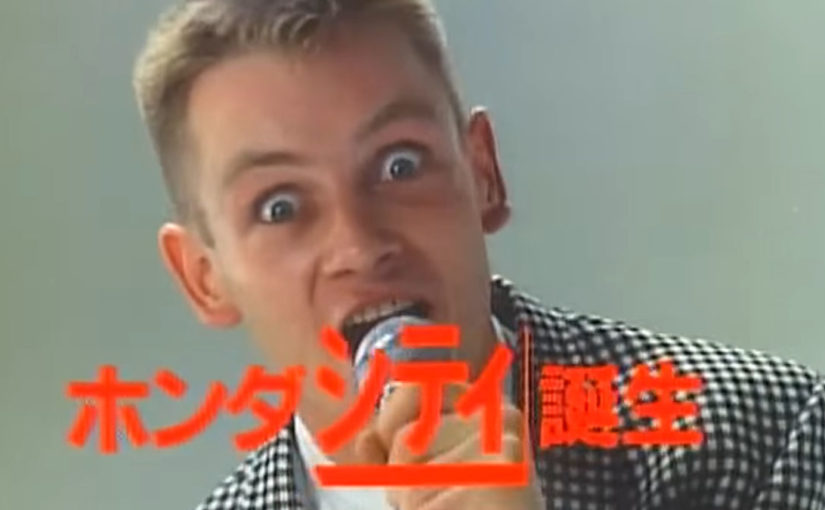
HitBit(ひっとびっと)はソニーが1980年代に使用していたパソコン及びその周辺機器・対応ソフトのブランド名。 由来は「ヒット」するように+コンピュータの記憶単位である「ビット」、及び「人々」。TVCMや雑誌広告での謳い文句は「人々のヒットビット」。イメージキャラクターに松田聖子を起用したことでも知られる。

Translation: HitBit is the name of a personal computer series that Sony marketed during the 1980s. A “hit” is what Sony wanted, “bit” refers to the computer memory unit, and “[the] people.” The catchphrase used in television commercials and magazine advertising was “[the] people’s hit bit.” Seiko Matsuda was the spokesperson for this marketing campaign.

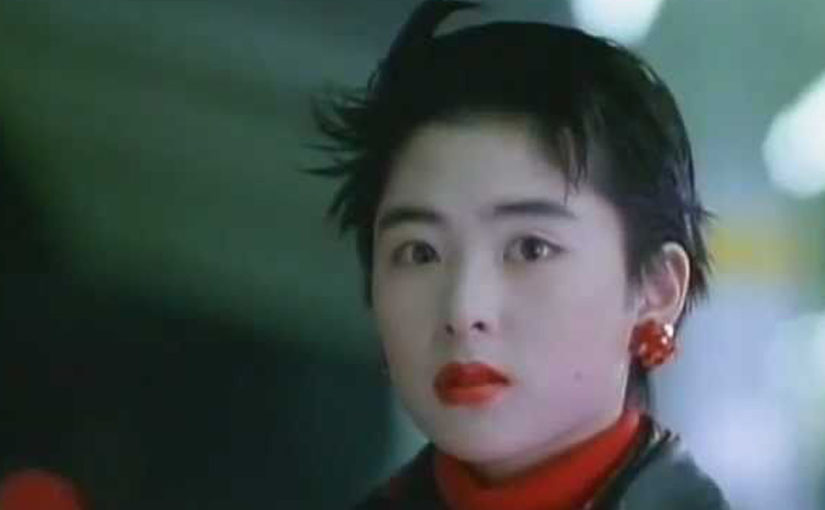
Seiko Matsuda (松田聖子, Matsuda Seiko, born Kamachi Noriko, 蒲池法子, on March 10, 1962) is a Japanese pop singer-songwriter. Born in Kurume, Fukuoka, she rose to fame in 1980 as a teen idol, making her debut with the song “Hadashi no Kisetsu”. Later in the same year, “Kaze wa Aki-iro” became the first of her 24 consecutive #1 hits in Japan.

Bon Jovi prescribes Bad Medicine for Sanyo

Sanyo got its start as a manufacturer of bicycle lamps. In 1952 it made Japan’s first plastic radio and in 1954 Japan’s first pulsator-type washing machine.

Bon Jovi is a hard rock band originating from New Jersey. Fronted by lead singer and namesake Jon Bon Jovi, the group originally achieved large-scale success in the 1980s.

Godzilla: It Came From Japan (part 2)

As the Godzilla series continued, the monster has been both a hero and an anti-hero. Godzilla is one of the most recognizable aspects of Japanese popular culture worldwide. To this day, Godzilla remains an important facet of Japanese films, embodying the kaiju subset of the tokusatsu genre. Godzilla has been considered a filmographic metaphor for the United States. The earliest Godzilla films, especially the original Gojira, attempted to portray Godzilla as a frightening, nuclear monster. Godzilla represented the fears of many Japanese of a repeat of the nuclear attacks on Hiroshima and Nagasaki.

The Peanuts are a Japanese twin sister singing group. They are Ito Emi (Ito Hideyo) and Ito Yumi (Ito Tsukiko). The twins were born in Nagoya on April 1, 1941. They are probably most known internationally for their appearances in the Mothra and Godzilla movies of the 1960s, in which they appeared as fairies called shobijin (small beauties) who had telepathic communication with Mothra. Although of course now played by different actresses, the characters have continued to appear in the more recent films as well.

The Beatles Budokan Security

The Beatles were the first rock group to perform [at the Nippon Budokan (日本武道館, Nippon Budōkan)] in a series of shows in June/July 1966; their appearances were met with suitable opposition who felt the appearance of a western pop group would defile the martial arts arena. By 1978, however, the arena gained worldwide fame when American artists Bob Dylan and Cheap Trick used the arena to record their concert albums, Bob Dylan at Budokan (1978) and At Budokan (1979), respectively.

The Beatles were an English rock band from Liverpool whose members were John Lennon, Paul McCartney, George Harrison and Ringo Starr. They are among the most commercially successful, and one of the most critically acclaimed bands in the history of popular music. Their innovative music and cultural impact helped define the 1960s.

Duran Duran Makes the Dolls Cry Suntory Whiskey Q

Due to wartime shortage of World War II, Kotobukiya [the company that would become Suntory] was briefly forced to halt its development of new products. In 1961, Kotobukiya launched the famous “Drink This Whiskey and Go to Hawaii” campaign. At the time, a trip abroad was considered a once-in-a-lifetime opportunity.

Duran Duran is a British pop/rock band notable for a long series of popular, synthesiser-driven hit singles and vivid music videos. They were the most commercially successful of the New Romantic bands, and a leading band in the MTV-driven Second British Invasion of the United States. They are still often identified as an “Eighties band” despite continuous recording and chart success over their twenty-eight year history.

“Is There Something I Should Know?” is the eighth single from the British pop band Duran Duran. It was released in March 1983 and became the band’s first UK Number One record. In New Zealand, it was the longest-running Number One single of 1983, staying atop the charts for nine weeks. It also reached #4 in the United States.

Charles Bronson Loves Mandom

Jerry Wallace, [an] American country singer who succeeded at billboard hot 100 in 1950s sang theme song for a Japanese TV ad starred by Charles Bronson in 1970. It became [the] biggest hit single for him through[out] his music career. The song title “Mandom” is [the] name of the company…advertised.

His better-known songs include Primrose Lane (1959), Shutters And Boards (1964), In The Misty Moonlight (1964) and “Otoko no Sekai” ( “The World of the Man”, English title: “The Lovers of the World”, “Otoko no Sekai”) (1970, his biggest selling single that [was] released in Japan only).

My Cup Noodle

Nissin Food Products Co., Ltd. (日清食品株式会社, Nisshin Shokuhin Kabushiki-gaisha) is the name of a company in Japan that makes instant ramen noodles. The company was established in 1948. Instant noodles and cup noodles were both invented by Nissin’s founder, Momofuku Ando in 1958.

For another steaming serving of ramen commercials, check out Commercial Heaven.

Candies Sweeten Sanyo AC

Sanyo Electric Co. Ltd. (三洋電機株式会社, San’yō Denki Kabushiki-gaisha) is a major Japanese electronics company and Fortune 500 company whose headquarters is located in Moriguchi, Osaka prefecture, Japan targeting the middle of the market, with over 324 offices and plants worldwide and about 100,000 employees.

Candies (キャンディーズ) was a famous Japanese idol group of the 1970s. Candies was composed of three girls: Ran Ito (伊藤蘭) called Ran, Yoshiko Tanaka (田中好子) called Sue and Miki Fujimura (藤村美樹) called Miki. Candies was formed in 1973, and starting with the song “あなたに夢中” (Anata ni muchu. crazy for you in English). They had overwhelming popularity with Japanese young people because of good harmonies.

Residential air conditioning is ubiquitous in Japan, South Korea, Taiwan, Singapore and Hong Kong, especially in the latter two due to most of the population living in small high-rise flats in warm climates. In this area, with soaring summer temperatures and a high standard of living, air conditioning is considered a necessity and not a luxury.

Kelly Osborne Turning Japanese Episode 3

Link to Episode 1 | Link to Episode 2

Assistant Language Teacher, often abbreviated to ALT, is a term that was created by the Japanese Ministry of Education at the time of the creation of the JET Programme as a translation of the term (外国語指導助手)”gaikokugo shido joshu” or literally “foreign language instruction assistant.” It is used primarily by the Japanese Ministry of Education, local Boards of Education (BOEs) and schools to refer to native language speakers who assist teaching languages in elementary, junior high and high schools in Japan.

The [Roppongi] area features numerous bars, nightclubs, restaurants, and other forms of entertainment including hostess clubs and cabarets. Among the Western expatriate community, it tends to be favoured by business people and financial workers as well as off-duty military.

Kyoto (京都市, Kyōto-shi) listen is a city in the central part of the island of Honshū, Japan. It has a population close to 1.5 million. Formerly the imperial capital of Japan, it is now the capital of Kyoto Prefecture, as well as a major part of the Osaka-Kobe-Kyoto metropolitan area.

Traditionally, [geisha] began their training at a very young age. Although some girls were sold to geisha houses (“okiya”) as children, this was not common practice in reputable districts. Daughters of geisha were often brought up as geisha themselves, usually as the successor (“atotori” meaning heir) or daughter-role (“musume-bun”) to the okiya.

Cameron Diaz Struts The Copacabana For SoftBank

[Cameron] Diaz has publicly admitted she is deeply germophobic and habitually rubs doorknobs so hard before opening doors to clean them that the original paint fades afterwards. Along with her floors, she says, she washes her hands “many times” each day and uses her elbows to push open doors. “I’m not scared of germs. I’m just aware of them…I’m not into other people’s fluids unless I know them really well.”

Copacabana is a 1978 disco song, sung by Barry Manilow, and written by Jack Feldman, Barry Manilow, and Bruce Sussman. It is also known as At the Copa after the first few words of the refrain. It debuted on Billboard magazine’s Top 40 chart on July 7, 1978, and peaked at #8. It peaked at #42 in the UK the same year 1978. A remixed version of the song peaked at #22 in 1993.

Samsung 707SC product page (English)
Samsung 707SC product page (Japanese)

Google